

Blue water trolling is the practice of dragging multiple lures or baits behind a moving boat in open ocean to target large pelagic fish like marlin, tuna, and wahoo. Known in the industry as offshore trolling, this method covers vast stretches of water by positioning lures at different distances and depths to mimic fleeing baitfish and trigger strikes. The technique is the cornerstone of big-game sport fishing, requiring specialized gear, precise spread management, and a working knowledge of how pelagic species behave. This guide breaks down everything you need to run an effective spread and put fish in the boat.
What is blue water trolling and how does it work?
Blue water trolling is offshore trolling where multiple lures and baits are dragged behind a moving boat at varying distances and depths to target large pelagic fish. The boat stays in motion, typically between 4 and 9 knots, while the spread of lures creates the illusion of a school of baitfish in flight. Fish like blue marlin, yellowfin tuna, and wahoo are ambush predators. They respond to that fleeing-bait presentation with explosive strikes.
The method works because pelagic fish spend most of their time searching for food across open water. A well-set spread covers a wide swath of ocean and puts lures in front of fish that might never see a stationary bait. The boat’s wake also plays a role. Turbulence, bubbles, and white water attract curious fish and concentrate them behind the transom, right where your lures are running.
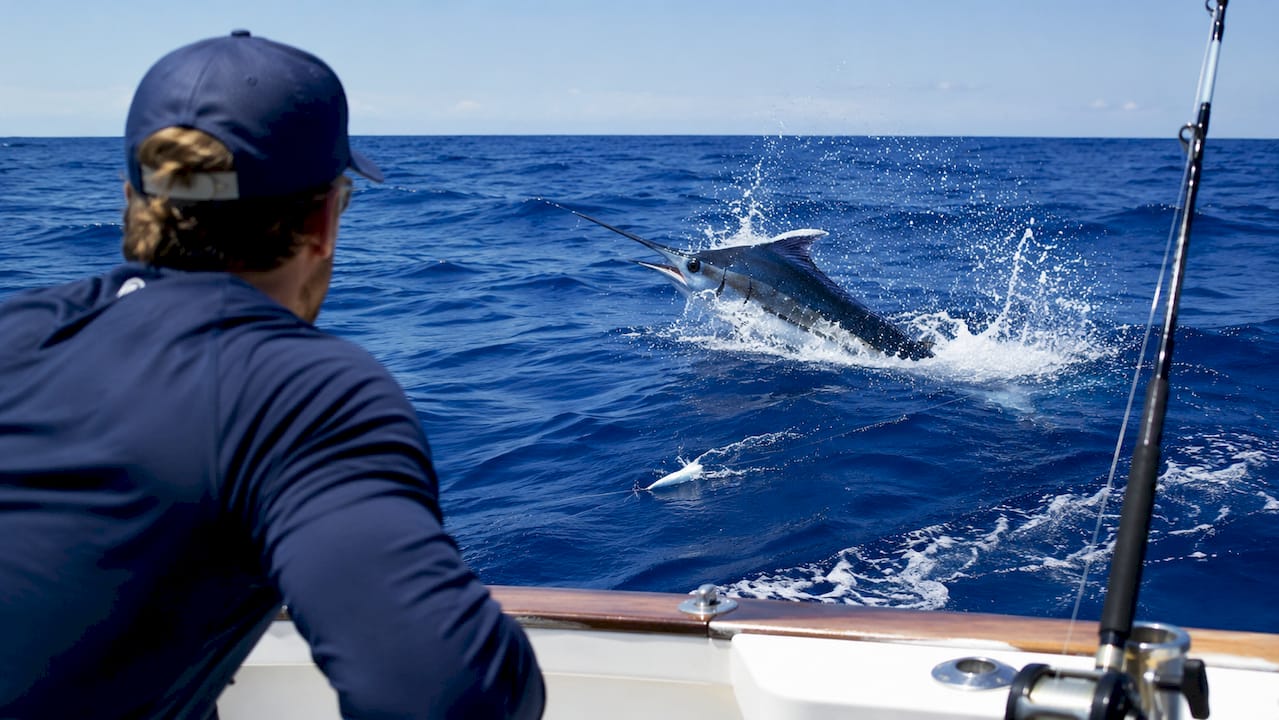
What separates blue water trolling from inshore trolling is scale and target species. You are fishing miles offshore, often in water exceeding 100 fathoms, chasing fish that can exceed 500 pounds. The gear, the tactics, and the stakes are all bigger.
What gear and tackle are essential for blue water trolling?
The right gear is not optional when you are targeting fish that can spool a reel in seconds. Blue water trolling demands heavy, purpose-built tackle across every category.
Rods and reels
Offshore trolling rods are rated by line class. For most blue water work, 80W and 130W class rods paired with lever-drag, two-speed reels are the standard. Brands like Shimano Tiagra and Penn International dominate this category because they handle sustained pressure from large fish without overheating. Two-speed reels matter because you need low gear to grind a fish up from depth and high gear to pick up slack fast when a marlin charges the boat.
Line and leader
Mainline for blue water trolling runs 80 to 130 lb monofilament or braided line, depending on the class you are fishing. Leaders are heavy monofilament, often 200 to 400 lb test, long enough to absorb the shock of a strike and protect against a fish’s bill or teeth. Wahoo, in particular, can cut through lighter leaders in one bite.
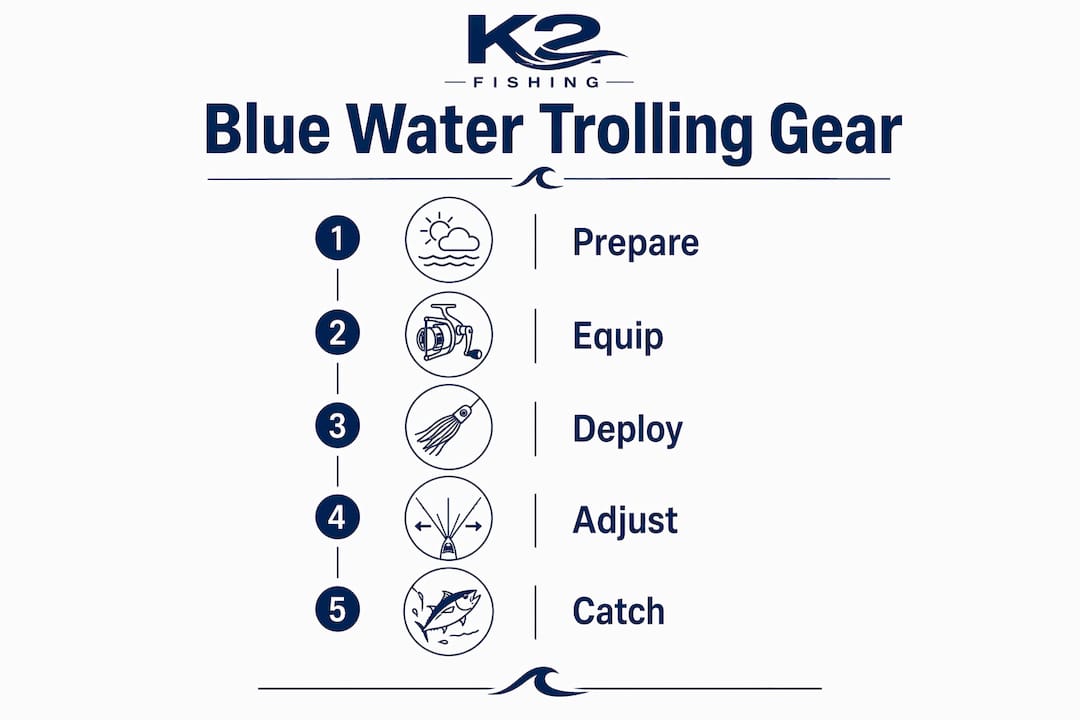
Lures and baits
Lure trolling is the most common approach in blue water fishing, with three main categories:
- Skirted trolling lures: Molded resin or plastic heads with vinyl skirts. These are the workhorses of offshore trolling, running at speed and creating a bubble trail that mimics a squid or small fish.
- Rigged dead baits: Ballyhoo and skip baits rigged to swim naturally at trolling speed. These work especially well for sailfish and smaller tuna.
- Live bait trolling: Bridled live bait slow-trolled at reduced speed. Live bait is especially effective when fish are visible but reluctant to hit fast lures.
Boat setup
Outriggers are non-negotiable. They spread your lines wide, keep them separated, and create a realistic baitfish spread. A proper cockpit layout includes rod holders at multiple angles, a fighting chair for large fish, and a clear deck for crew to move safely during a fight.
Pro Tip: Color and head design on skirted lures matter more than most anglers realize. Dark heads like black and purple work in rough, cloudy conditions. Bright colors like pink, chartreuse, and blue perform best in clear blue water with strong sunlight.
How to rig and run lure spreads for effective blue water trolling
A lure spread is the arrangement of lines and lures behind the boat. Getting it right is the single biggest factor in your strike rate.
Standard spread positions
A typical blue marlin spread uses 5 to 7 skirted lures pulled at 7 to 9 knots, placed across multiple positions:
- Long rigger lines: Run from the outrigger tips, set furthest back and widest. These lures ride in cleaner water outside the main wake.
- Short rigger lines: Set closer to the boat and slightly inside the long riggers. These lures work in the edges of the white water.
- Corner lines: Run directly off the transom corners. These are the closest lines and often carry the largest lures.
- Shotgun line: A single line run straight back, further than all other lures, down the center of the wake. This covers fish that follow the boat but hang back.
Lure sizing by position
Bigger lures go on the corners and long riggers where they need to push water and be visible from a distance. Smaller, more subtle lures work better inside the spread where fish are already close to the boat. Mixing sizes creates a realistic school effect.
Speed and lure action
Trolling speeds generally range from 4 to 9 knots, but the right speed depends on the lure and the species. The table below shows common speed ranges by target:
| Target species | Recommended speed | Lure type |
|---|---|---|
| Blue marlin | 7–9 knots | Large skirted lures |
| Yellowfin tuna | 5–8 knots | Medium skirted lures |
| Wahoo | 8–12 knots | High-speed lures |
| Mahi-mahi | 5–7 knots | Small skirted lures |
Pro Tip: Watch each lure as you set it. A correctly running lure should smoke and bubble at the surface, dipping just below and popping back up in a rhythmic cycle. A lure that tumbles or spins is running too fast or too slow and will not draw strikes.
What species are best targeted by blue water trolling?
Blue water trolling covers a wide range of pelagic species, each with distinct preferences and behaviors that affect how you fish for them.
- Blue marlin and black marlin: The premier big-game targets. Blue marlin respond well to large skirted lures at 7 to 9 knots. Black marlin, found primarily in the Pacific and Indian Oceans, often prefer slightly slower presentations and rigged baits.
- Bluefin tuna, yellowfin tuna, and southern bluefin tuna: Tuna are school fish that cover enormous distances. Yellowfin respond to medium skirted lures and cedar plugs. Bluefin, particularly large adults, often require faster presentations and heavier tackle.
- Wahoo: The fastest fish in the ocean, wahoo hit at high speed and require wire or heavy fluorocarbon leaders to survive their teeth. Speed is your friend when targeting wahoo, with many captains running specialized wahoo lures at 10 to 12 knots.
- Mahi-mahi (dolphinfish): Aggressive and acrobatic, mahi-mahi are often found near floating debris and weed lines. They hit smaller lures readily and are one of the easiest blue water species to target.
Ocean conditions drive species location as much as any other factor. Warm water currents like the Gulf Stream concentrate baitfish and, by extension, the predators that follow them. Color changes in the water, where blue meets green, are reliable strike zones. Temperature breaks of even 2 to 3 degrees can hold fish in numbers.
For a full breakdown of pelagic species behavior and preferred baits, the fish species directory at K2fishing covers each target in detail.
Blue water trolling tips and best practices for success
Knowing the theory is one thing. Executing it on the water is another. These practices separate consistent producers from anglers who go home empty.
- Match lure action to boat speed. Lure tumbling or skipping kills your strike rate. Adjust speed until each lure cycles cleanly. If a lure will not behave at any speed, change the head weight or skirt length.
- Account for current when reading your GPS. GPS speed does not reflect effective lure speed when you are running against or with a strong current. A 7-knot GPS reading in a 2-knot following current means your lures are only moving at 5 knots relative to the water. Adjust accordingly.
- Use the propwash boundary for tuna. Experienced captains position lures at the bubble and clean water interface rather than only in pristine lanes. Tuna key in on that boundary and will hit lures placed right on the edge of the white water.
- Assign crew roles before you set lines. Crew coordination during active trolling is critical. One person watches the spread, one monitors the sonar and radio, and the captain manages boat speed and direction. Confusion during a strike costs fish.
- Inspect lures after every fish and every hour. Skirts tear, hooks dull, and leader connections weaken. A lure that looks fine from the cockpit may be running poorly in the water. Pull each one, check the hook point with your thumbnail, and re-rig anything that is not perfect.
Pro Tip: When a fish strikes and misses, do not immediately reel in. Drop the boat speed slightly and let the lure fall back. A marlin or tuna that missed will often circle and hit again within 30 seconds if the lure stays in the water.
Key takeaways
Blue water trolling produces big-game fish consistently when anglers match gear, speed, and lure placement to the target species and conditions.
| Point | Details |
|---|---|
| Definition | Blue water trolling means dragging multiple lures behind a moving boat in open ocean to target pelagic fish. |
| Spread setup | Run 5–7 lures across corner, rigger, and shotgun positions to cover the full wake zone. |
| Speed range | Troll between 4 and 9 knots, adjusting by species and lure type for correct action. |
| Current adjustment | GPS speed differs from effective lure speed; account for current direction and strength. |
| Crew coordination | Assign clear roles before setting lines so every crew member monitors a specific part of the spread. |
What I’ve learned after years of running offshore spreads
The biggest mistake I see from anglers new to offshore trolling is treating the spread as a set-and-forget system. They put the lures in the water, sit down, and wait. That approach works occasionally, but it misses the constant micro-adjustments that separate a productive day from a blank one.
Speed is the variable most anglers underestimate. I have watched captains spend 20 minutes dialing in a single lure’s action by changing speed in half-knot increments. That level of attention pays off. A lure running perfectly at 7.5 knots will draw strikes that the same lure at 8 knots will not, because the action changes completely.
The other thing experience teaches you is patience with the shotgun line. Most beginners ignore it or run it too close. A lure set 80 to 100 yards straight back, down the center of the wake, catches fish that have followed the boat for a quarter mile and are finally committing. Some of my best marlin have come off that back line when nothing else was producing.
Gear quality matters, but it matters less than boat handling and spread management. I have seen anglers with modest tackle out-fish boats with $50,000 setups because they understood their spread and kept their lures running right. Start with solid fundamentals, then upgrade your gear as your skills grow.
— Daniel
K2fishing lures built for serious offshore trolling
Anglers who put in the work to master their spread deserve lures that perform every time they hit the water. K2fishing builds handcrafted offshore trolling lures using abalone resin, which produces a brightness and flash that standard plastic heads cannot match in blue water conditions.
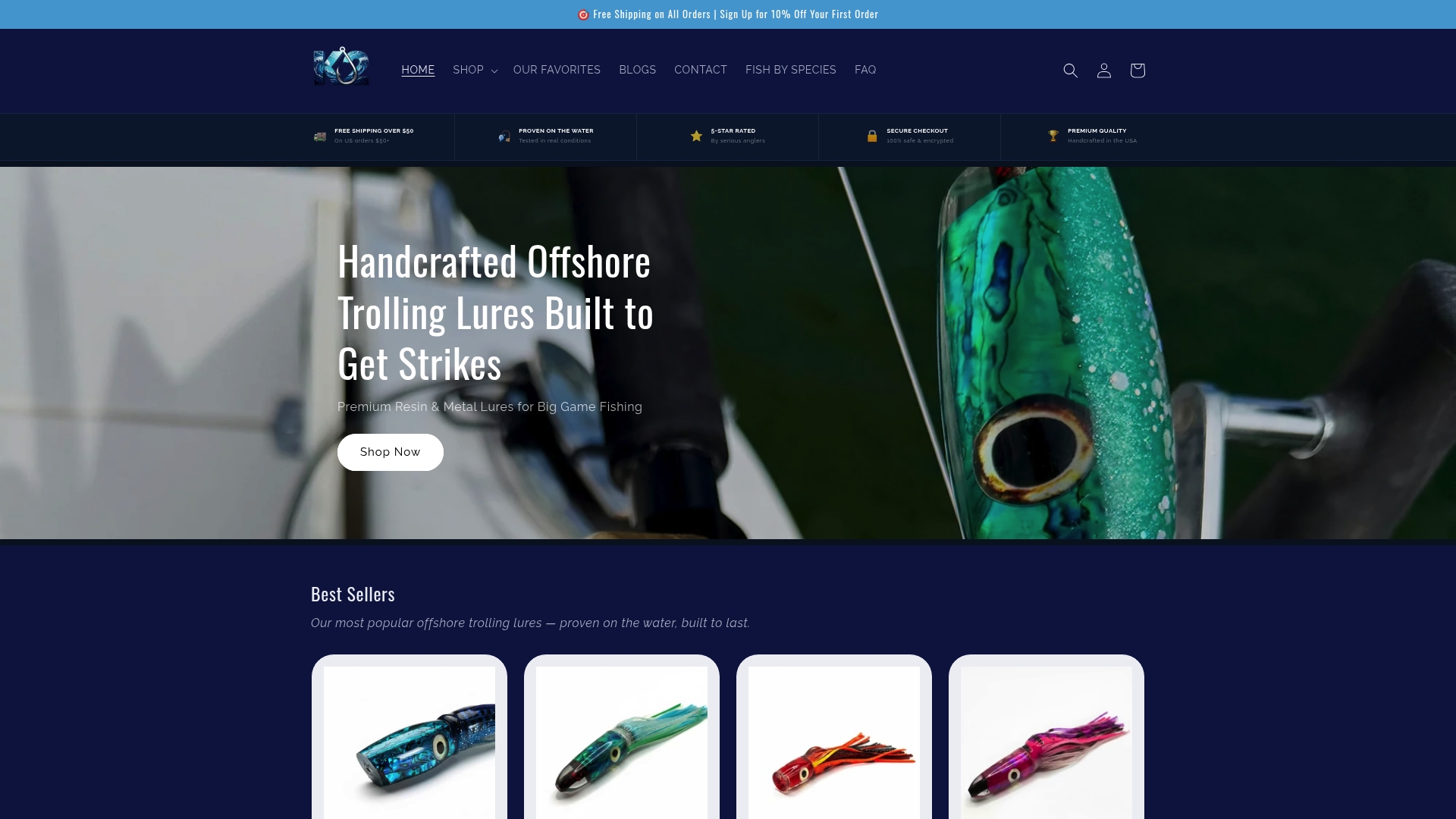
The K2fishing lineup covers the full range of blue water targets, from medium 7.5-inch skirted lures for tuna and mahi-mahi to large 15-inch heads for blue marlin. Every lure is tested in real offshore conditions before it ships. If you want to know which lure fits your target species and spread position, the offshore lure FAQ covers sizing, rigging, and color selection in detail. Serious anglers who have fished K2fishing lures report consistent results across multiple seasons.
FAQ
What is the difference between blue water trolling and inshore trolling?
Blue water trolling targets large pelagic species like marlin and tuna in deep offshore water, typically beyond 100 fathoms, using heavy tackle and multi-lure spreads. Inshore trolling uses lighter gear in shallower coastal water for smaller species like striped bass or Spanish mackerel.
How fast should you troll for blue marlin?
Blue marlin trolling is most effective at 7 to 9 knots using large skirted lures set across a 5 to 7 lure spread. Speed may vary slightly based on sea conditions and lure head design.
How many lines should you run in a blue water spread?
A standard offshore spread runs 4 to 7 lines, covering corner, short rigger, long rigger, and shotgun positions. More lines increase coverage but also increase the risk of tangles during a strike.
Does current affect trolling speed?
GPS boat speed does not equal effective lure speed when current is present. Current markedly impacts lure speed relative to the water, so anglers must adjust throttle based on observed lure action, not just the GPS display.
What lures work best for blue water trolling?
Skirted trolling lures are the most widely used option across all blue water species. Color selection depends on water clarity and light conditions, with bright colors like pink and blue performing well in clear offshore water and darker colors like black and purple working better in overcast or rough conditions.









